
In this article
- 1. Before coaching: clarifying the request
- 2. Scoping: the coaching contract and objectives
- 3. Executive coaching sessions: how does the work unfold?
- 4. Along the way: mid-point review and adjustments
- 5. Closure and after the coaching
- Conclusion: successful executive coaching rests on a clear framework
- Frequently asked questions
Many executives know they would benefit from support, yet hesitate because they do not know what to expect. How many sessions? Who sets the objectives? What will the company learn about what is said? Executive coaching is far from opaque, however: a serious engagement follows a precise process, from the first request to the final review, with stages, roles and rules known to everyone from the outset.
This article describes that journey from start to finish, as we practise it at Hodemia Consulting with executives in Algeria, Europe and the Gulf. It is aimed at chief executives, members of executive committees, board members and HR directors who are considering coaching, for themselves or for a key manager. If you are new to the subject, start with our guide to executive coaching in Algeria, which sets out the stakes and typical situations.
1. Before coaching: clarifying the request
Where does the request come from?
Executive coaching arises in two ways. Either the executive takes the initiative, because they are going through a new role, a transformation or a period of doubt. Or the company suggests it: a board chair, a shareholder or an HR department wishes to support a newly promoted manager or prepare a succession. In the second case, one precaution is essential: coaching cannot be imposed. An executive who experiences coaching as a sanction will get nothing out of it.
The preliminary meeting
Before any commitment, a free first meeting allows the executive and the coach to get to know each other. It serves to check three points:
- the request genuinely calls for coaching, rather than consulting, training or therapeutic support;
- the executive is available and motivated to commit to work spanning several months;
- a relationship of trust can develop, which remains the first factor of success.
We sometimes advise against starting. When an executive is mainly looking for a technical recommendation, for example on how to organise their compliance framework, a consulting assignment will be more useful. Saying so from the outset is part of the profession's ethics.
2. Scoping: the coaching contract and objectives
The coaching contract
The coaching contract formalises the engagement. It is two-way when the executive pays for the coaching personally, three-way when the company is the sponsor. The competency framework of the International Coaching Federation (ICF) makes establishing and maintaining clear agreements one of the coach's core competencies. A good contract specifies in particular:
| Section | Content |
|---|---|
| Parties | Executive, coach, sponsor where relevant |
| Objectives | Two or three observable target outcomes |
| Format | Number of sessions, length, frequency, in person or by video |
| Reviews | Mid-point and final reviews with the sponsor |
| Confidentiality | What is shared, with whom, and what never is |
| Terms | Fees, cancellation, early termination |
The three-way kick-off meeting
When the company funds the engagement, a meeting brings together the executive, their sponsor and the coach. The sponsor sets out their expectations, the executive their own reading of the situation, and the coach makes sure the chosen objectives are shared. It is also the moment to state the confidentiality rule clearly: the sponsor will be informed of progress, not of the content of the sessions.
Precise, measurable objectives
Objectives are the common thread of coaching. They must be expressed as observable behaviours. "Becoming a stronger leader" is too vague. "Running my executive committee meetings so that each director takes a position before I do" is a workable objective. For each one, we define one or two simple indicators with the executive: team feedback, decisions delegated, length of meetings, quality of exchanges with the board.
3. Executive coaching sessions: how does the work unfold?
The format
Sessions usually last between one hour and an hour and a half, two to four weeks apart. This pace gives the executive time to experiment between meetings. A typical engagement includes three to six working sessions, in addition to scoping and closure. Meeting in person remains preferable for the first session; video calls then suit executives who travel often or are based outside Algiers, provided a calm and confidential setting is guaranteed.
The structure of a session
Each session follows a simple logic:
- a look back at what has happened since the last meeting and at the commitments made;
- the choice of the day's topic, linked to the objectives in the contract;
- exploring the situation through questioning, reformulation and sometimes role play;
- defining one or two concrete actions to test before the next session.
The coach's tools
The core of the work remains listening and questioning. The coach may nevertheless use complementary tools: a 360-degree questionnaire to gather the views of direct reports, peers and line manager; a personality or behavioural preferences inventory; role play to prepare a negotiation or a difficult announcement. These tools inform reflection; they do not replace it.
The coach's stance
The coach does not hand out ready-made solutions. They help the executive see their situation from other angles, identify their room for manoeuvre and decide for themselves. They also dare to challenge: pointing out a contradiction, questioning a habit, refusing an overly comfortable explanation. In our experience, particularly with executives of banks and family groups, it is often this caring frankness that drives progress.
4. Along the way: mid-point review and adjustments
Work between sessions
Coaching does not happen only in the coach's office. Between sessions, the executive puts into practice what they decided: delegating a sensitive file, holding a conversation postponed for months, reorganising their diary to free up strategic time. Keeping a short logbook helps track progress and resistance.
The mid-point review
Halfway through, a progress review again brings together, if the contract provides for it, the executive, the sponsor and the coach. It measures progress towards each objective, shares the first effects observed and decides what comes next: continue as planned, refocus an objective that has become less relevant or add a few sessions. The executive prepares this review with their coach and decides what they wish to share.
Unforeseen situations
An engagement lasting several months often runs into company events: an inspection, a change of shareholder, a reputational crisis. The contract must remain flexible enough to absorb these events without losing sight of the initial objectives. Conversely, if a serious personal difficulty emerges, the coach respects the limits of their role and refers the executive to a qualified professional.
5. Closure and after the coaching
The closing session
The last working session is devoted to a review with the executive: ground covered, objectives achieved or not, main lessons learned. The coach helps them formalise what they take away and the points to watch in the months ahead. Good coaching makes the executive autonomous; it does not create dependency.
The final three-way review
When the company is the sponsor, a final discussion allows the overall assessment to be shared. Feedback from colleagues, gathered before and after the coaching, is valuable at this stage. In the Gulf as in Europe, the most mature organisations combine the executive's self-assessment with the views of the sponsor and of the teams.
Embedding the gains over time
The effects of coaching consolidate after the sessions end. Some executives schedule a follow-up session a few months later; others extend the approach through collective work with their executive committee. The most lasting gains often concern the way decisions are made and the company's values are embodied, which ties in directly with governance and compliance issues.
The ethical rules governing the whole process
From the first meeting to the final review, a professional coach relies on a code of ethics, such as the ICF Code of Ethics, revised in 2025, or the Global Code of Ethics supported in particular by the EMCC. Confidentiality, management of conflicts of interest, transparency about each party's role: these rules protect both the executive and the company and are worth checking before signing.
Conclusion: successful executive coaching rests on a clear framework
Effective executive coaching is neither an informal conversation nor one-to-one training. It is a structured journey: a clarified request, an explicit coaching contract, observable objectives, sessions punctuated by experimentation, shared reviews and a closure that leaves the executive autonomous. This framework does not constrain the work; it makes it possible, by building the trust needed to speak frankly about the real issues. If you are considering an engagement, start by summing up in one sentence the situation you want to change: it will be the starting point of your first meeting.
FAQ: executive coaching
How long does executive coaching last?
Most engagements run for three to six months, with sessions two to four weeks apart. A targeted objective, such as taking up a new role or preparing a negotiation, can fit into three sessions. Work on leadership posture takes longer. The duration is set in the coaching contract, then confirmed or adjusted at the mid-point review.
What does a coaching contract contain?
The contract sets out the parties (the executive, the coach and, where relevant, the company paying for it), the objectives, the number and frequency of sessions, the venue or remote format, the review arrangements, fees and cancellation terms. Above all, it sets the confidentiality rules: the company follows overall progress, never the content of the conversations between the coach and the client.
Can the executive stop the coaching midway?
Yes. Coaching relies on the executive's voluntary commitment, and a sound contract sets out the terms of an early termination. If the relationship is not working or the objectives are no longer relevant, it is best to raise it openly during a session. The coach may also suggest referring the executive to another professional better suited to their situation.
What happens between two sessions?
This is where most of the work happens. The executive tries out, in day-to-day life, the commitments made in the session: delegating a file, running a committee differently, preparing a difficult conversation. They observe what works and what meets resistance, often by keeping a few notes. The next session starts with this feedback, which shapes the rest of the work.
How can the effectiveness of executive coaching be assessed?
The final situation is compared with the objectives set at the start, using observable indicators defined during scoping. Feedback from the professional environment, gathered before and after the engagement, complements the executive's self-assessment. The final three-way review lets the sponsor share their view. We advise against numerical return-on-investment promises, which are hard to demonstrate rigorously.
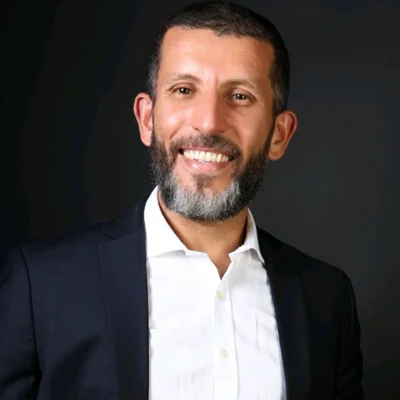
Nearly 20 years of international experience in regulatory compliance, risk and governance (EY in Luxembourg, San Francisco and London; Director, Regulatory & Compliance Services at KPMG Middle East). Certified coach, trainer and academic.